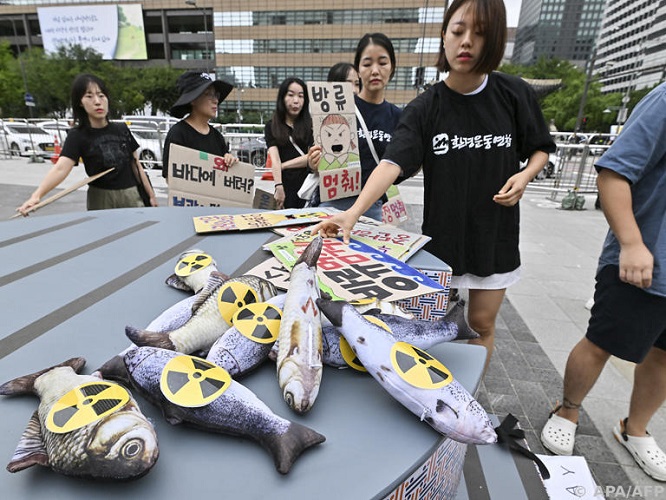
Japan has begun the introduction of treated radioactive water from the damaged Fukushima nuclear power plant into the sea. The discharge into the Pacific Ocean started at 1:03 PM local time on Thursday, as confirmed by the plant’s operator, Tepco.
According to Japanese authorities, the release is deemed safe as the filtered and heavily diluted water falls below internationally acceptable contamination limits. The International Atomic Energy Agency (IAEA) also gave its approval in July, stating that the water meets international standards and the impact on humans and the environment is “negligible”.
However, neighboring countries have strongly criticized Japan’s actions, expressing concerns that the water could contaminate food sources. China condemned Japan’s approach, with the Foreign Ministry in Beijing stating that the disposal of contaminated water is a crucial nuclear safety issue with cross-border implications, rather than being solely Japan’s concern. China has banned seafood imports from ten Japanese prefectures, including Fukushima and Tokyo. The Chinese special administrative regions of Hong Kong and Macau have also announced their intention to implement an import ban from Thursday. Japan anticipates significant losses as a result, given that China is the largest importer of Japanese seafood. In 2022, seafood worth $600 million was shipped to the People’s Republic of China.
In South Korea, the police in the capital city of Seoul arrested 16 individuals for attempting to enter the Japanese embassy. Approximately 50 predominantly young people had gathered outside the building to protest. Banners held by the demonstrators read, “The sea is not Japan’s trash can” and “Stop immediately, do not discharge contaminated water into the sea.”
While South Korea stated that it does not have scientific objections to Japan’s actions, it has urged Japan to ensure transparency. However, South Korea has temporarily banned the import of fish and other food products from the Fukushima region.
Tepco has been storing the contaminated water on the premises of the nuclear power plant, which was destroyed by a tsunami triggered by a severe earthquake in 2011. According to the company, the discharge of the currently over 1.3 million metric tons of water is expected to take around 30 years.
Page: 1 2
India Energy News Today: Renewable Growth, Grid Expansion, and Rising Power Demand Shape the Nation's…
U.S. Energy News Today: Rising Power Demand Drives Investment in Grid Expansion and Clean Energy…
The world's energy landscape is changing at an extraordinary pace. What was once considered a…
Switzerland 2–0 Algeria: A Professional Performance That Sends Switzerland Into the Round of 16 The…
Portugal Edges Croatia 2–1 in a Dramatic FIFA World Cup 2026 Round of 32 Clash…
Spain's Brilliant 3–0 Victory Over Austria: A Night I Will Never Forget Football has always…