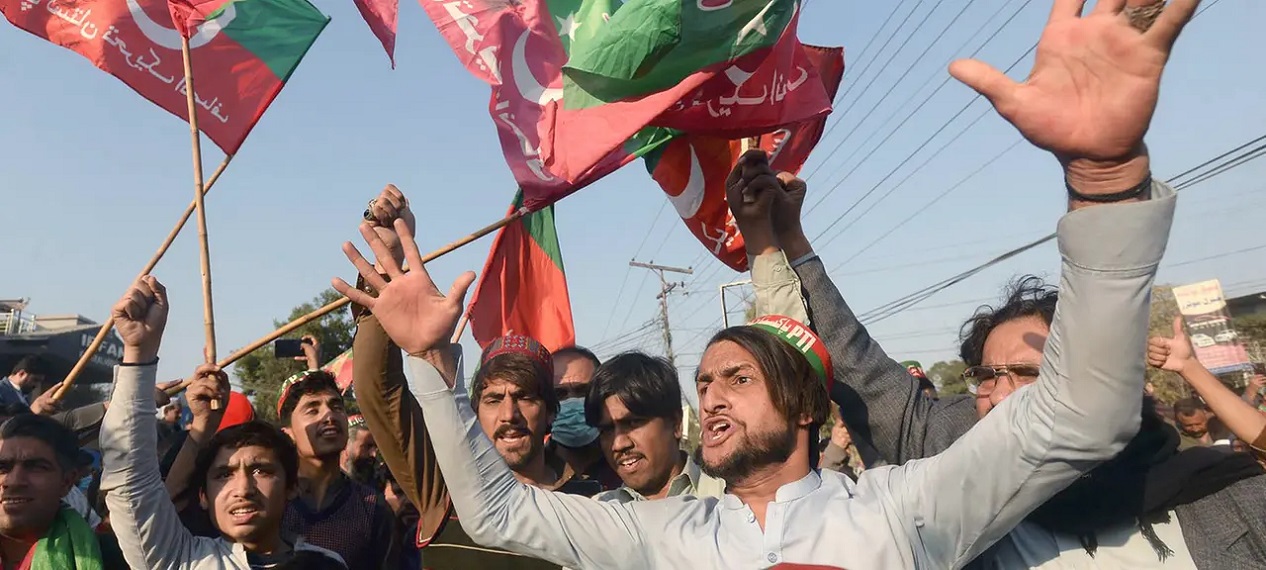
Opposition Emerges as Strongest Force in Pakistan
Pakistan is facing a challenging process of government formation: Although the opposition party PTI emerged as the largest force in the election, the Muslim League PML-N also claims victory and has already begun talks regarding potential coalitions.
The final results of the parliamentary elections in Pakistan were announced with significant delay. According to statistics from the Election Commission, 99 percent of the constituencies have been counted over two days after the voting. Independent candidates, mostly associated with the incarcerated former Prime Minister Imran Khan and his opposition party PTI, have become the largest force with 101 out of 266 parliamentary seats.
The Muslim League PML-N, led by the favored candidate Nawaz Sharif, obtained 75 seats, while Pakistan’s People’s Party PPP, led by former Foreign Minister Bilawal Bhutto Zardari, secured the third position with 54 seats. Eleven other parties will enter the National Assembly with a total of 34 seats. These results present a challenging situation for the nuclear-armed nation in terms of government formation: Both Khan’s opposition party and Sharif, who recently returned from exile, claim victory. However, Sharif is expected to have better chances of forming a coalition. His PML-N has already held talks with the third-placed PPP.
It is expected that Sharif will seek defections from the independent candidates to secure a majority. These candidates have 72 hours after the election to join other parties or form their own factions. A coalition with a smaller party is also possible and could provide Sharif with the necessary majority of 134 seats. The elections were overshadowed by internet shutdowns and allegations of manipulation. Results are still pending in two constituencies, and voting did not take place in one case due to the assassination of a candidate.
Since gaining independence from British India over 75 years ago, Pakistan has experienced frequent unrest and instability. The military has ruled for more than half of this period, and even under civilian governments, generals have often played a decisive role in determining the success or failure of political leadership.