





Germany’s Heat Wave: A Nation Unprepared for the New Climate Reality
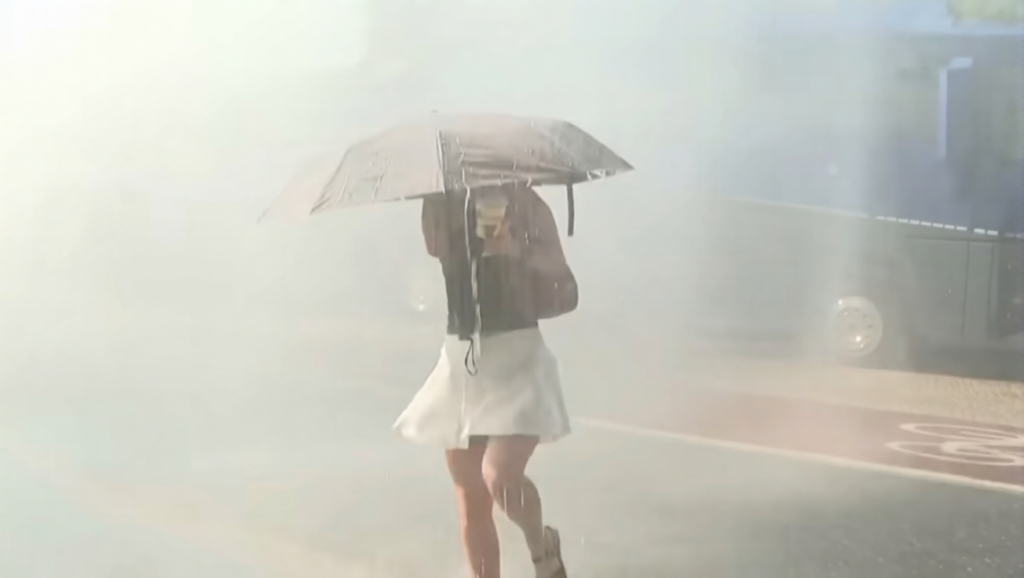
Berlin – In a scene that has become emblematic of Germany’s struggle with extreme heat, police water cannons – typically deployed to disperse protesters – were turned on residents this weekend, not as a tool of crowd control, but as a desperate measure to cool down a city suffocating under record-breaking temperatures. Al Jazeera reported on the unprecedented use of water cannons for cooling.
 For the third consecutive day, Germany shattered its all-time temperature record, reaching 41.7°C in Brandenburg, east of Berlin. The German Weather Service (DWD) confirmed the new national record, surpassing the previous high set just one day earlier. The reading, which meteorologists described as “off the charts,” is part of a broader heat wave sweeping across Europe, pushing infrastructure, emergency services, and social systems to their breaking points.
A Country Caught Off Guard
Germany is not prepared for this heat wave. The phrase has become a refrain among officials, emergency responders, and ordinary citizens alike. Unlike southern European nations accustomed to prolonged summer heat, Germany’s infrastructure, buildings, and public services were designed for a temperate climate that is rapidly becoming a thing of the past.
The consequences are visible across the country. Outdoor events have been cancelled as organizers cite health risks for participants and spectators. Deutsche Bahn, the national railway operator, severely reduced services and warned of delays due to heat-related track deformations. In several cities, asphalt around tram tracks melted, causing disruptions to urban transport. Sections of the autobahn buckled and burst under the thermal stress, forcing emergency repairs and lane closures.
Authorities have issued urgent appeals for water conservation, as reservoirs and groundwater levels drop amid sustained high temperatures and minimal rainfall. Yet the message is complicated by the fact that people are desperate to cool down, and water usage has surged.
The Air Conditioning Gap
One of the most striking aspects of Germany’s vulnerability is the near-total absence of air conditioning in private homes and many public buildings. According to data from the German Institute for Building Technology, fewer than 5% of residential buildings have air conditioning. Unlike the United States, Japan, or even parts of southern Europe, German residential architecture has historically relied on thick masonry, external shutters, and natural ventilation to manage summer heat. These traditional methods are proving inadequate against temperatures that exceed 40°C.
The situation is particularly dire for the elderly and other vulnerable groups. “I think for elderly, it could become a real problem,” said a museum staff member in Berlin, as his institution opened its doors as a cooling space for those without access to air conditioning. “We have people coming in just to sit in the lobby for an hour. They are exhausted, some are disoriented.”
A handful of buildings with air conditioning – mostly hotels, shopping centers, and corporate offices – have begun opening as public cooling shelters. The art museum in Berlin is among them, offering respite from the extreme heat, especially for the vulnerable. But these ad hoc measures are insufficient for a city of 3.7 million people.
Emergency Services Under Strain
The human toll of the heat wave is most evident in the strain on emergency services. Firefighters in Berlin are preparing to deal with more than just fires. “We’re preparing to deal with the impact of this extreme heat on people,” said a spokesperson for the Berlin fire department. “Yesterday alone, we responded to more than 2,000 incidents.” The Berlin Fire Brigade confirmed the record number of callouts in a press statement.
Crews are stationed around the city, responding to a wide range of heat-related emergencies: people overheating in their homes, cases of heatstroke and dehydration, and – tragically – drowning incidents in lakes around the city, as residents flock to any available water body for relief. Local police reported a spike in drownings as people sought to cool off in unsupervised waters.
The increased demand for emergency services is stretching resources thin. Officials acknowledge they are doing their best to keep up, but the volume of calls is unprecedented. “For the future, we need to prepare ourselves better,” one fire department official admitted. “For us, this kind of heat wave is really something special and something new – and something that we probably have to deal with more often in the future.”
A Regional Crisis
Germany’s heat wave is not an isolated phenomenon. As the extreme temperatures move east, the country’s neighbors are also hitting records. Poland recorded its highest ever temperature of 38.3°C in Słubice, Denmark marked its hottest day at 35.6°C, and the Czech Republic recorded 40.2°C, all verified by national meteorological services. The Scandinavian country of Denmark, known for its mild summers, recorded temperatures above 35°C – a level that would be exceptional even in Mediterranean climates.
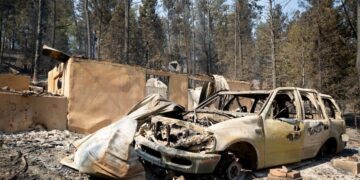
The dry conditions have dramatically increased fire risks across the region. In Germany, emergency services remain on high alert for wildfires, particularly in forested areas and agricultural regions. The German Weather Service issued extreme fire danger warnings for multiple states. Firefighters are conducting preventive patrols and have pre-positioned equipment in high-risk zones.
The Political and Economic Dimensions
The heat wave has reignited debate about Germany’s climate policy and preparedness. While the country has been a leader in renewable energy and emissions reduction targets, critics argue that adaptation measures have lagged far behind mitigation efforts. A report by the German Environment Agency highlighted the gap between emissions targets and adaptation spending.
 The economic costs are mounting. Disruptions to rail and road transport are affecting supply chains. Agricultural losses are expected to be significant, with crops wilting in fields and livestock suffering from heat stress. The German Farmers’ Association estimated crop losses of up to 30% in some regions. The tourism sector, already struggling with the broader European heat wave, is seeing cancellations as potential visitors reconsider travel plans.
Politically, the heat wave is putting pressure on the government to accelerate adaptation measures. Calls are growing for mandatory air conditioning standards in new buildings, expanded green spaces in cities, and better early warning systems for extreme heat events. However, such measures require significant investment and long-term planning – neither of which is easily achieved in the midst of a crisis.
Looking Ahead: Storms on the Horizon
After days of extreme heat, Berlin is bracing for a dramatic change in weather. The German Weather Service forecast severe thunderstorms and heavy rain, which will bring some relief from the oppressive temperatures. However, authorities warn that this sort of extreme weather could bring a host of other problems.
Flash flooding, lightning strikes, and sudden wind gusts pose risks to a population already exhausted by the heat. The ground, baked hard by days of sun, may not absorb heavy rainfall, increasing the risk of urban flooding. Emergency services are preparing for a new set of challenges even as they continue to deal with the aftermath of the heat wave.
A Warning for the Future
The events of this week in Germany are not an anomaly; they are a preview of the new climate reality. Scientists have long warned that heat waves will become more frequent, more intense, and longer-lasting as global temperatures rise. The IPCC’s Sixth Assessment Report projected that such extreme events will become commonplace even under moderate emissions scenarios. Germany’s experience – from melted asphalt to overwhelmed emergency services – illustrates the profound societal disruptions that lie ahead if adaptation efforts are not significantly scaled up.
For now, Berliners are finding their own ways to cope. Parks and public fountains are crowded at all hours. Ice cream shops report record sales. And the water cannons, once a symbol of police authority, have been repurposed as an emergency cooling measure – a stark reminder that in a rapidly warming world, even the most familiar tools may need to be reimagined.
As one elderly Berliner put it, sitting in the shade of a linden tree: “I never thought I’d see the day when I’d be grateful for a police water cannon. But here we are. This is what the future looks like, isn’t it?”
The question hangs in the air, unanswered, as the heat continues to rise.