








U.S. Energy News Today: Rising Power Demand Drives Investment in Grid Expansion and Clean Energy
July 2026
The United States energy sector is entering a new phase of rapid transformation as electricity demand reaches historic highs, driven by artificial intelligence (AI), expanding data centers, electrification, and record summer temperatures. Utilities, policymakers, and private investors are responding with major investments in grid infrastructure, renewable energy, battery storage, and natural gas generation to maintain reliability while supporting long-term economic growth.
Record Electricity Demand
The U.S. recently recorded its highest weekly electricity generation on record, surpassing 100,000 gigawatt-hours for the first time. The increase reflects rising air-conditioning use during extreme heat and growing electricity consumption from AI-powered data centers and advanced manufacturing facilities. Analysts expect electricity demand to continue climbing through 2027 as digital infrastructure expands across the country.
Grid Modernization Becomes a National Priority
To meet growing demand, utilities are accelerating investments in transmission and distribution networks. New funding initiatives are supporting the construction of thousands of miles of transmission lines, helping connect renewable energy projects while improving grid reliability.
One of the largest recent developments is a multibillion-dollar financing package for transmission upgrades in Texas. The investment aims to strengthen grid resilience, reduce outages, and prepare the state’s power system for increasing electricity demand from AI, manufacturing, and population growth.
Renewable Energy Continues Strong Growth
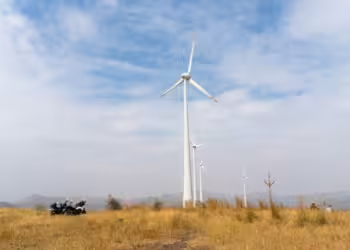
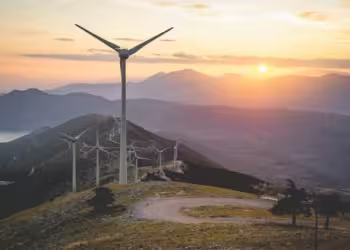
Solar power remains one of the fastest-growing energy sources in the United States. Industry forecasts indicate that solar installations, battery storage systems, and wind projects will account for the vast majority of new generating capacity added during 2026.
Battery storage is also expanding rapidly, allowing utilities to store excess renewable electricity and deliver power during periods of high demand. The United States recorded a strong first quarter for energy storage installations, reflecting continued investment across utility-scale, commercial, and residential markets.
Natural Gas Still Plays a Major Role
Despite rapid renewable growth, natural gas continues to provide a significant share of U.S. electricity generation. Utilities view gas-fired power plants as an important source of reliable electricity, particularly as demand from data centers grows faster than renewable projects can be connected to the grid.
Many technology companies are simultaneously investing in renewable power purchase agreements, geothermal energy, advanced nuclear technologies, and battery storage to reduce emissions while maintaining reliable operations.
Policy Debate Continues
Energy policy remains an area of active debate. Discussions over renewable energy incentives, transmission permitting, domestic energy production, and infrastructure investment continue to shape future energy development.
Supporters of renewable energy argue that expanding solar, wind, and battery storage will improve energy security and reduce long-term electricity costs. Others emphasize maintaining investment in oil, natural gas, and nuclear power to ensure grid reliability during periods of rapidly increasing demand.
Oil Market Remains Stable
The U.S. oil industry continues to demonstrate stability despite global market uncertainty. Recent industry data show that the number of active drilling rigs remained largely unchanged, suggesting producers are maintaining disciplined investment strategies while monitoring global crude oil prices and demand.
Looking Ahead
The outlook for the U.S. energy sector remains positive but increasingly complex. Rising electricity consumption, expanding AI infrastructure, and continued economic growth are creating unprecedented opportunities for investment in generation, transmission, and energy storage.
Industry experts expect renewable energy capacity to continue increasing over the next several years, while natural gas and nuclear power remain essential components of a reliable and diversified energy mix. As utilities modernize the grid and new technologies mature, the United States is positioned to strengthen its energy security while supporting innovation and economic development.
Bottom Line: The defining story in U.S. energy today is not a shift toward a single fuel source, but the effort to build a more resilient, higher-capacity energy system capable of supporting surging electricity demand from households, businesses, and the rapidly growing AI economy.